
How to Clean Copper
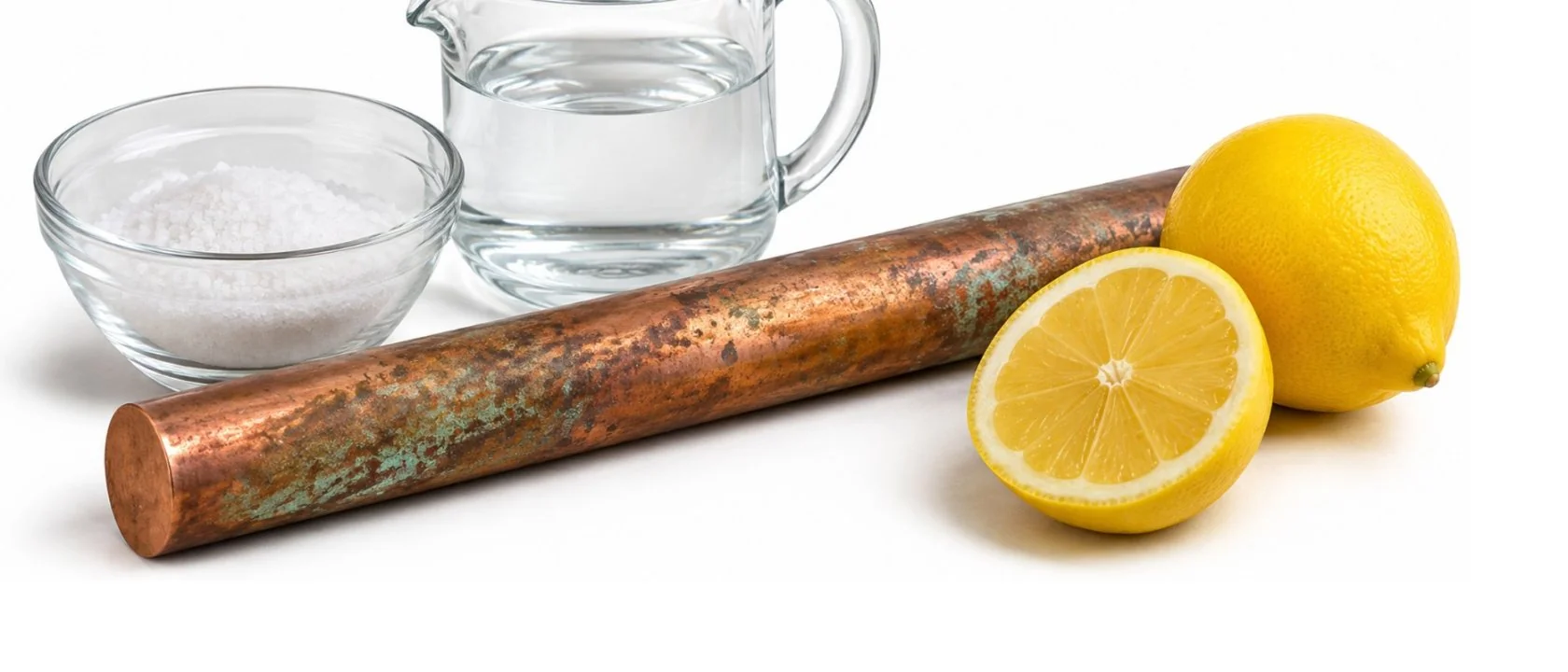
Copper changes color as soon as it meets the air. First it darkens, then turns brown, and outdoors it goes green after a few years. That isn't dirt and it isn't rust, but a thin layer the copper makes itself. If you like it, leave it. If you want the shine back, cleaning copper is simple, as long as you know what you have: bare copper or lacquered copper, something for the kitchen or something for the windowsill.
Why copper turns brown and green
Indoors, a layer of copper oxide forms, reddish at first and brown later. Outdoors it goes further: rain, sulfur in the air and, near the coast, salt slowly turn it into green minerals. That color is called patina. You can read more about how it works, and why the Statue of Liberty turned green, on copper.
Your hands play a part too. Oil and salt from the skin leave marks, especially on bare copper. If you want copper to keep its shine, handle it with clean, dry hands.
First check: lacquered or bare?
A lot of copper has a thin, clear lacquer, like some of the copper pyramids. That lacquer holds the shine. Wipe a lacquered piece only with a soft, dry or slightly damp cloth. You can polish it, but the lacquer wears away, and the copper underneath then tarnishes in patches. If you're not sure, test a spot that doesn't show first.
Cleaning copper with Pitambari
Pitambari is a polishing powder for copper and brass from India. Many people there have used it for generations on their copper jugs and cups. It's easy to use: a little powder on a damp cloth or sponge, rub the copper with it, then rinse well with water. Follow the instructions on the packaging. Pitambari is available in Indian shops and online.
We recommend Pitambari for the inside of our copper water bottles and cups, where the water touches the bare copper. Clean the inside two to three times a week.
Copper polish
For unlacquered copper, an ordinary copper polish from the store works best, on a pyramid, a candlestick or a kettle. Apply it with a soft cloth, rub until the brown layer is gone, rinse with water and dry well. Don't use copper polish on the inside of anything you drink from or cook in, unless the packaging says it's safe.
How to clean copper with vinegar, lemon and salt
No polish in the house? What's in your kitchen will do:
- Mix a splash of vinegar with a generous spoonful of salt, or use half a lemon with salt on it.
- Rub the copper with it using a soft cloth. The brown layer dissolves by itself.
- Rinse with water and dry the copper well, or you'll get spots.
Don't leave the acid on the copper for long, and always rinse. For green deposits in a corner or a seam, use a soft toothbrush.
What not to clean copper with
- Steel wool and abrasive cleaner: they leave scratches you can't get out.
- The dishwasher: hot water and detergent make copper dull and blotchy.
- Bleach and chlorine: they attack the copper.
Piece by piece
Copper bottle or cup. Pitambari inside, a soft damp cloth outside. Leave the bottle upside down to dry for a few hours and only screw the cap on once it's completely dry.
Copper pot. Many copper pots are lined with tin or stainless steel inside; wash that like any pot. Polish the copper outside and the copper bottom with copper polish or vinegar and salt. Keep the pot out of the dishwasher.
Copper pyramid. A lacquered pyramid only with a soft cloth. An unlacquered one with copper polish, Pitambari or vinegar and salt. Lift it by the base, not the tip. Whether you keep the patina is a matter of taste: some people love the way a pyramid changes color over the years.
Copper in the garden. Don't polish an antenna, a spiral or a wire in the ground. They're allowed to turn brown and green; the copper still touches the air and the soil. You can read how to make one on how to make an electroculture antenna.
Frequently asked questions
What is the best way to clean copper?
For unlacquered copper, copper polish works best. Pitambari, a polishing powder from India, also works well and is the choice for the inside of copper water bottles and cups. Without polish, vinegar or lemon with salt will do.
Is toothpaste good to clean copper?
Toothpaste is slightly abrasive, so it does remove some tarnish. On shiny copper it leaves fine scratches. Vinegar and salt or copper polish work better.
Can you clean copper with WD-40?
WD-40 isn't a polish. It leaves an oily film that you then have to remove again. Copper polish, Pitambari or vinegar and salt are the better choice.
How do you clean the bottom of a copper pot?
With copper polish, or with vinegar and salt and a soft cloth. Rinse and dry straight away. Steel wool will clean it faster, but leaves scratches.
How often should you clean copper?
A pyramid or a candlestick only when you want the shine back. The inside of a copper water bottle or cup two to three times a week.
Can copper go in the dishwasher?
No. It turns dull and blotchy. Wash it by hand and dry it right away.
Copper for home and garden is available from Meditech Europe: the copper water bottles and cups, the copper Cheops pyramid and the copper Russian pyramid, both lacquered or unlacquered.

Written by Marijn Makkes van der Deijl, who has been working with copper and pyramids since 2019.
Sources
- Meditech Europe (2026). Copper bottles and cups and Copper products, user manuals V1, November 2026.
- American Chemical Society. How the Statue of Liberty became green. Reactions, infographic.
Last updated: November 2026