
The Bosnian Pyramids
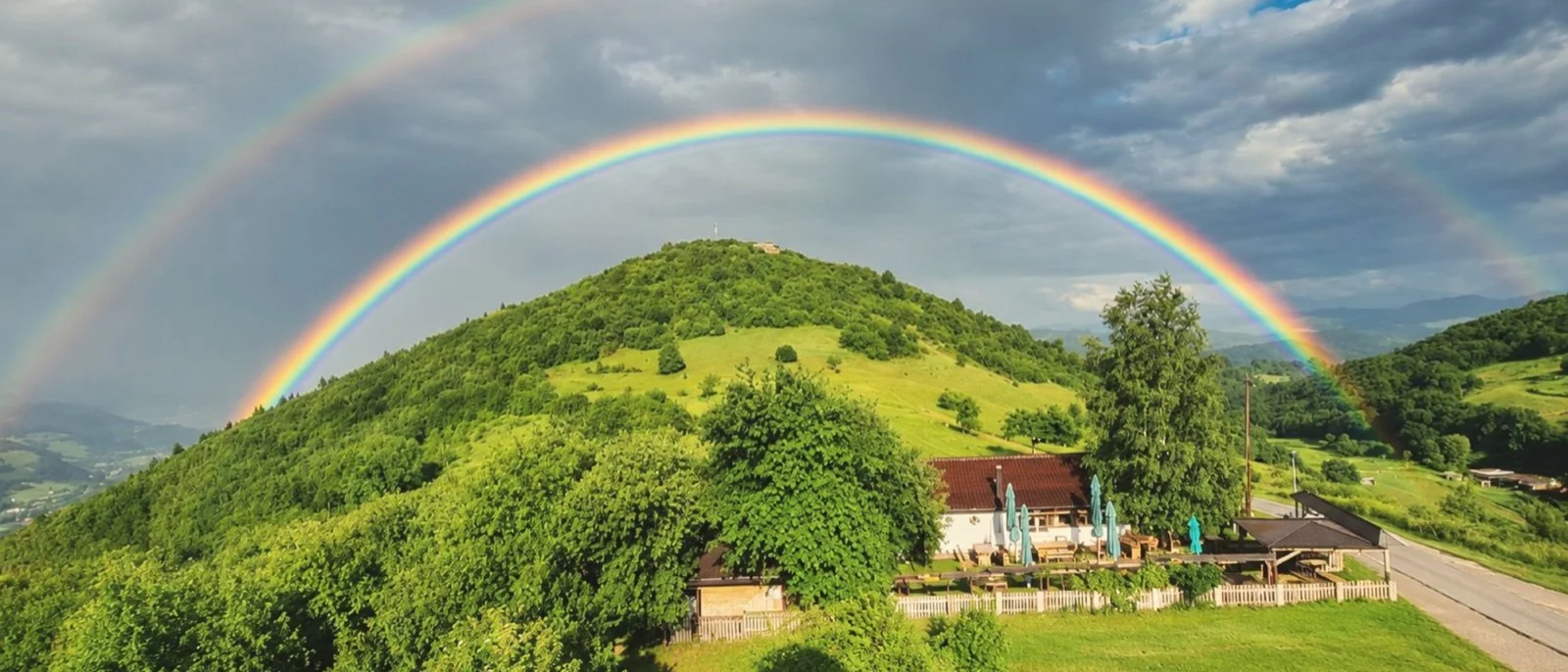
Few pyramid stories stir up as much as the hills near Visoko, a small town northwest of Sarajevo. Since 2005 Sam Osmanagich has said that the oldest and largest pyramids in the world lie there. Many people travel there especially, and measurements have been taken for years. Here we set out what is claimed, what has been measured and how science sees it. Then you can form your own view.
What Osmanagich says
According to Osmanagich and his foundation, the hill Visočica is a pyramid. He calls it the Bosnian Pyramid of the Sun. In the area he sees more, including the Pyramid of the Moon and the Pyramid of the Dragon, connected by tunnels underground: the Ravne tunnels. He points to the precise alignment to the north, to blocks he says are concrete poured on site, and to a fossil leaf said to be more than 30,000 years old. He calls the pyramids energy amplifiers and speaks of a beam of energy rising from the top. He says the tunnels are good for health. Digging has been going on since 2006, and part of the tunnels is open to visitors.
What has been measured
The foundation and researchers working with it have been measuring in and around the hills for years. These are the measurements most talked about.
Sound above hearing. In 2011 Paolo Debertolis and Heikki Savolainen reported at a congress in Visoko that they had recorded ultrasound at the top of the Pyramid of the Sun and in the tunnels, and not on the surrounding hills. It appeared as a short congress paper, published by the foundation.
A signal of tens of thousands of hertz. In April 2010 a Croatian group led by Slobodan Mizdrak measured an electromagnetic signal of about 28 kHz at the top of the Pyramid of the Sun, with two field meters, an oscilloscope and a spectrometer. The signal was strongly tied to the spot, on a strip about 16 feet (five meters) wide. A year later Paolo Debertolis and Sara Acconci recorded signals around 30 to 35 kHz there with ultrasound microphones and a spectrum analyzer. Sometimes the signal disappeared for a few minutes and then came back.
Negative ions. In the Ravne tunnels the foundation has counted negative ions in the air twice a year since 2018. It reports 10,000 to more than 300,000 per cubic centimeter, with a highest reading of 330,000. Ordinary outdoor air has 100 to 5,000. As possible sources the foundation names the quartz-bearing rock, the water flowing underground and the stable climate in the tunnels.
7.83 hertz. The Schumann resonance is mentioned too. It is real, but it belongs to the earth as a whole: you can measure it anywhere, including your own backyard. That it can be measured at Visoko says little about the hill itself.
The measurements are still being repeated, and new ones are added every year.
How geologists and archaeologists see it

In 2006 a team from the Faculty of Mining and Geology at the University of Tuzla studied the hill. Their conclusion: Visočica is a natural formation of sedimentary rock. Geologists know hills with such triangular flanks as flatirons, and they occur in many places around the world. The excavations uncovered slabs of conglomerate and sandstone that also break this way in nature.
A group of European archaeologists rejected the idea in a joint statement in 2006. Osmanagich maintains that science is mistaken. On top of Visočica there are real traces of the past, though: the remains of a medieval fortress.
Why it still fascinates
Whatever you believe about the hills themselves, Visoko is a remarkable place. Nowhere else has a pyramid shape been measured for so long and so often, and the tunnels are open to visit. It shows how strongly the pyramid captures the imagination. What has been measured on pyramids elsewhere, you can read at pyramid power.
Frequently asked questions
Are the Bosnian pyramids real?
That is the big question. Osmanagich and his foundation say yes. The geologists who studied the hill see a natural formation, and archaeologists have rejected the idea. So far there is no convincing evidence that the hills were built by people.
What is measured in the Ravne tunnels?
According to the foundation: many negative ions, an even temperature and humidity, little radiation and a signal around 28 kHz. In 2010 and 2011 two research groups measured signals between 28 and 35 kHz on top of the Pyramid of the Sun.
Who is Sam Osmanagich?
A Bosnian-American businessman from Houston. He came up with the idea in 2005 that the hills near Visoko are pyramids, and has led the foundation that digs there ever since.
Does 7.83 Hz have anything to do with the pyramid?
7.83 Hz is the Schumann resonance, a vibration between the earth's surface and the ionosphere. It can be measured anywhere on earth, so at Visoko too.

Written by Marijn Makkes van der Deijl, who has been working with copper and pyramids since 2019.
Sources
- Mizdrak, S. (2010). Measurements of an electromagnetic signal at the top of the Pyramid of the Sun, April 2010.
- Debertolis, P. and Acconci, S. (2011). Report on ultrasound measurements at the Pyramid of the Sun, May 2011. SB Research Group.
- Osmanagich, S. (2026). Origin and Environmental Role of Negative Air Ions. Journal of Environmental Science and Engineering 15(3), 88–106. doi:10.17265/2162-5298/2026.03.003
- Debertolis, P. and Savolainen, H. (2011). Research of ultrasound wave emissions by megalithic structures in Visoko Valley. 2nd Congress ICBP, Visoko. Bosnian Foundation of the Pyramid of the Sun.
- Osmanagich, S. (2025). Environmental Ionization in Enclosed Geospheres: Comparative Study of Global and Local Measurements (2018–2025). Journal of Advanced Artificial Intelligence, Engineering and Technology 1(3). doi:10.56147/aaiet.1.3.24
- Vrabac, S. et al. (2006). Study of the hill Visočica. University of Tuzla, Faculty of Mining and Geology.
- European Association of Archaeologists (2006). Statement on the "Bosnian pyramids".
Last updated: November 2026